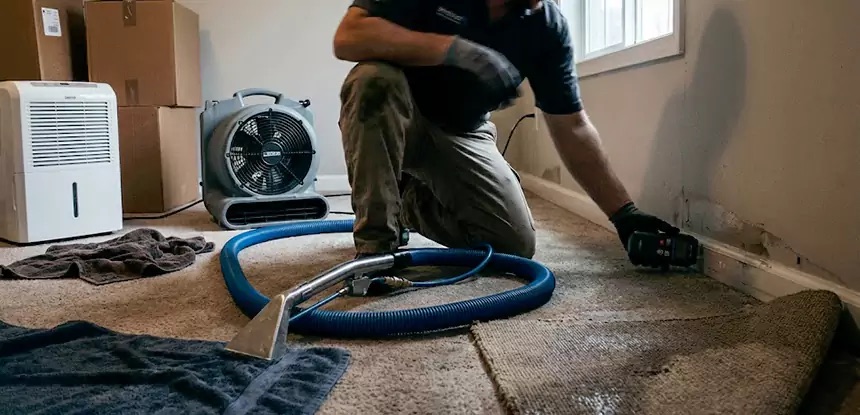
What needs assessment
Record where water first appeared and whether it crossed outdoor soil, drains, or debris. Photograph entry points from safe locations. Inspection should follow thresholds, lower walls, flooring layers, and connected rooms rather than assuming every wet area has the same contamination level.
Three points to discuss
- Entry route
- Outdoor contact and debris
- Connected wet rooms
Drying and material decisions
Never cross flooded roads to reach a property. Once access is safe, ask how the provider separates source control, contaminated-material decisions, drying, and repairs. A stormwater map helps with longer-term planning but does not identify the condition of water inside a particular building.
Property context
Planning the work in Littleton
For a Littleton loss, distinguish an indoor supply release from sump, drainage, roof, or groundwater entry. Report the timing relative to precipitation or thawing and whether the source continues. City flood-zone information supports outdoor-risk questions, while the provider needs the actual route through the building.
Littleton’s public works and planning resources identify local neighborhoods and drainage context. City mapping includes a FEMA flood-zone layer. For storm or groundwater entry, review the property address; for an indoor release, describe the source and the floor or wall layers affected rather than relying on the neighborhood label.
Questions about this work
Is all storm-related water considered the same?
No. Direct rain entry, surface runoff, and sewage-contaminated water can require different cleanup approaches.
What should I prepare before calling about this work in Littleton?
Give the exact address, the suspected source, the discovery time, affected rooms or levels, source repairs already completed, and any safety or access restrictions. Ask the responding provider to confirm current availability and the proposed initial scope.
How will I know when the affected materials are ready for repairs?
Ask for the final moisture or condition findings and the reasons supporting drying completion, cleaning, or removal. Any source problem or inaccessible area should be explained before finishes conceal the assembly again.
Sources and further guidance
Prepared October 7, 2026. General information; the proposed work should follow the conditions found at your property.