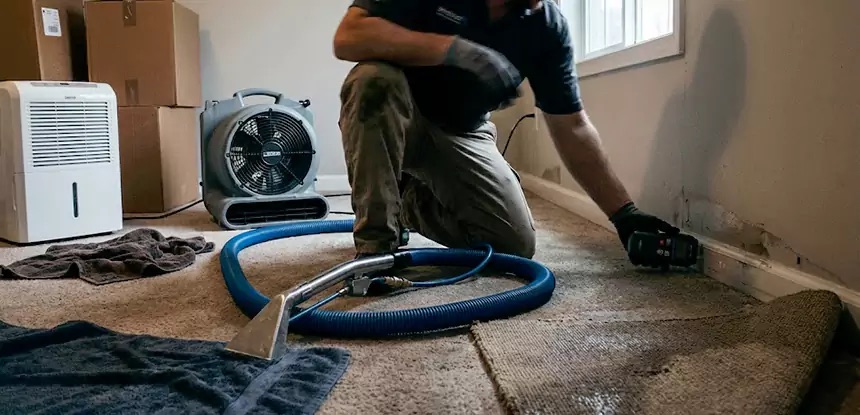
What needs assessment
Describe entry depth, time in the building, affected levels, and contact with sewage or chemicals if known. Do not enter standing water near electrical systems. Professional assessment should separate salvageable nonporous materials from porous items that cannot be appropriately cleaned.
Three points to discuss
- Official access guidance
- Electrical and structural hazards
- Contaminated porous materials
Drying and material decisions
Ask about containment, debris removal, porous-material disposal, cleaning, and drying verification. Floodplain information is useful for property planning but does not establish an individual insurance outcome. Photograph the condition safely and request an organized written scope for the work actually proposed.
Property context
Planning the work in Littleton
For a Littleton loss, distinguish an indoor supply release from sump, drainage, roof, or groundwater entry. Report the timing relative to precipitation or thawing and whether the source continues. City flood-zone information supports outdoor-risk questions, while the provider needs the actual route through the building.
Littleton’s public works and planning resources identify local neighborhoods and drainage context. City mapping includes a FEMA flood-zone layer. For storm or groundwater entry, review the property address; for an indoor release, describe the source and the floor or wall layers affected rather than relying on the neighborhood label.
Questions about this work
Can outside floodwater be handled like a clean pipe leak?
No. Outside water may carry sewage, chemicals, and debris, which change protective measures and material decisions.
What should I prepare before calling about this work in Littleton?
Give the exact address, the suspected source, the discovery time, affected rooms or levels, source repairs already completed, and any safety or access restrictions. Ask the responding provider to confirm current availability and the proposed initial scope.
How will I know when the affected materials are ready for repairs?
Ask for the final moisture or condition findings and the reasons supporting drying completion, cleaning, or removal. Any source problem or inaccessible area should be explained before finishes conceal the assembly again.
Sources and further guidance
Prepared October 7, 2026. General information; the proposed work should follow the conditions found at your property.